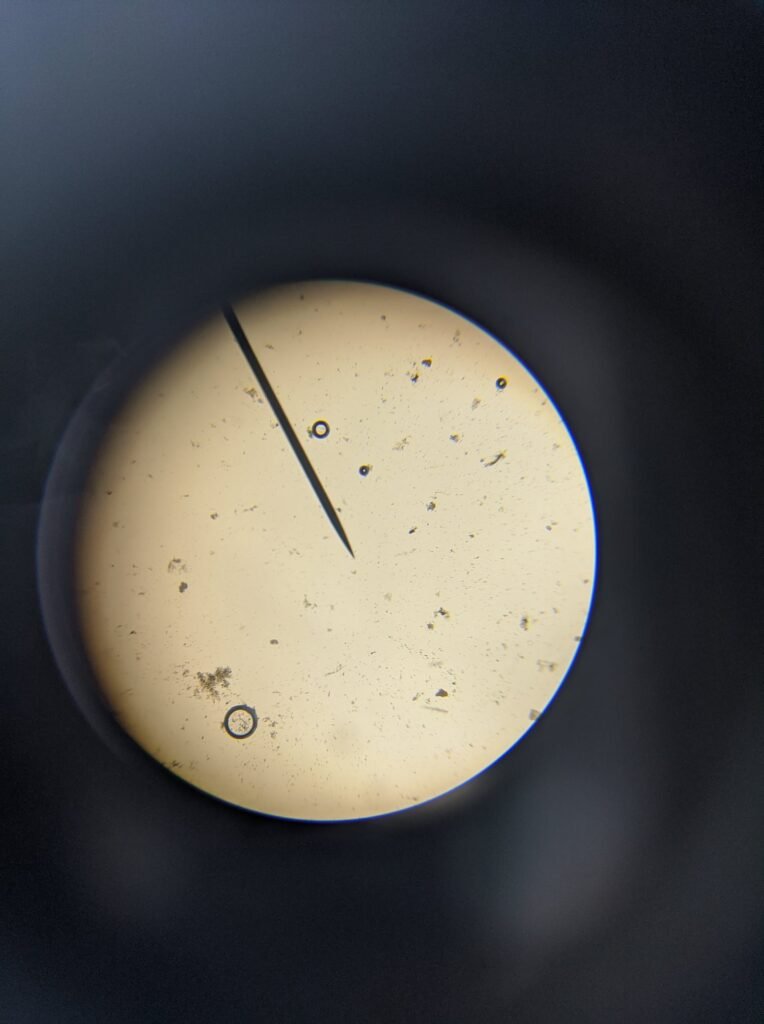
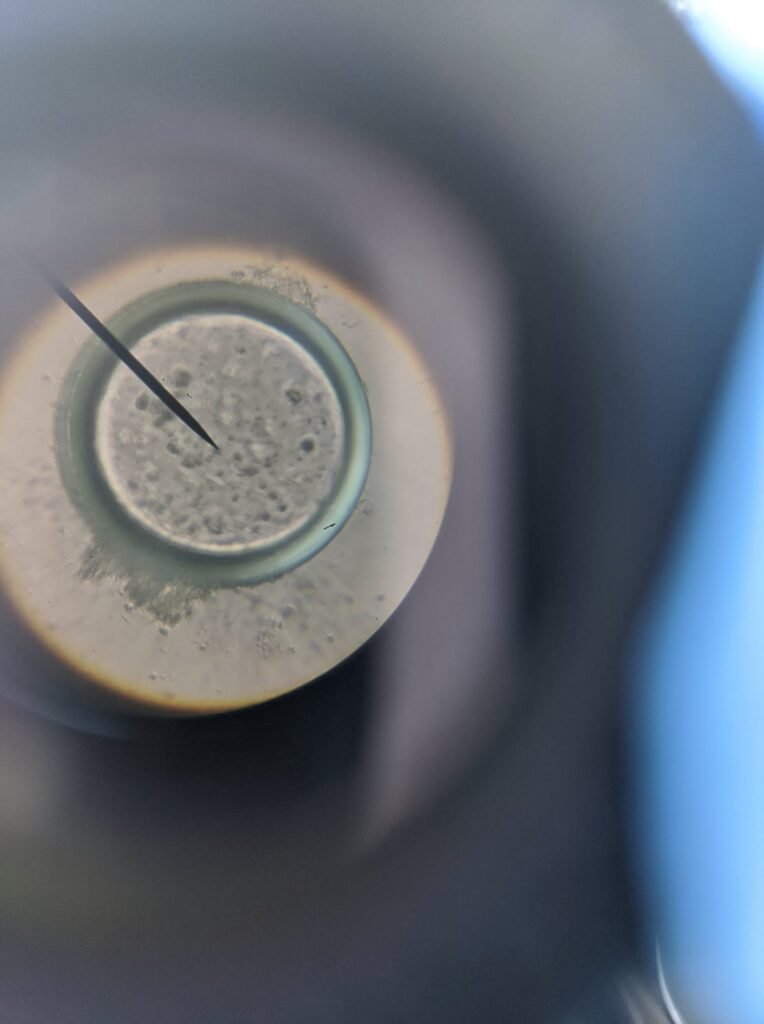
Today we got out the microscopes and looked at our pond cultures one last time. We found a few different things today. Looking at a sample from the soil jar, we saw a circular specimen that we thought was a volvox. It occured to me later that it could have been a centric diatom. I forgot to take a picture of what we saw under the scope so it’s hard to say. You can see a picture of a centric diatom at this link – does anyone who saw the specimen today see what I mean? What do you think – did we see a volvox or a diatom? We also saw some quick swimming organisms, which were fun to watch under the scope. We couldn’t pin them down at higher resolution so we weren’t able to identify them. One student got a video, but it’s hard to make them out. Hopefully the everyone got some good lab drawings of these first two! In addition to our jar pond cultures we had a sample from the our backyard pool filter, which happened to have some algae growing on it. When we looked at a sample of that under the scope we saw what we identified as a volvox (it is possible that this, too, was a diatom – it’s hard to say!). These pictures of the Subphylum Chlorophyceae almost convinces me that our specimen is a volvox. I have included a picture in this album of this specimen at two different magnifications.
After we put the scopes away, we spent a little bit of time talking about Prokaryotic vs. Eukaryotic cell structure, noticing the similarities and differences and practicing labeling the cell parts. We finished lab today with some coloring pages of an Amoeba, a Paramecium, and a Euglena. Identifying and coloring the different structures is a great way to learn the names of the organelles and the distinctions between them (plus, coloring is fun!). I wanted them to have a chance to focus in on the different parts because next week we will be looking under the microscopes at prepared slides and trying to identify organelles. I also gave them a concept map about protists – I though it might be a helpful study tool to see on one page how all the different things they’re learning about relate to each other, or it can be used as a review to check your understanding of some of the vocabulary. Any which way you choose to use it, I hope it’s helpful!