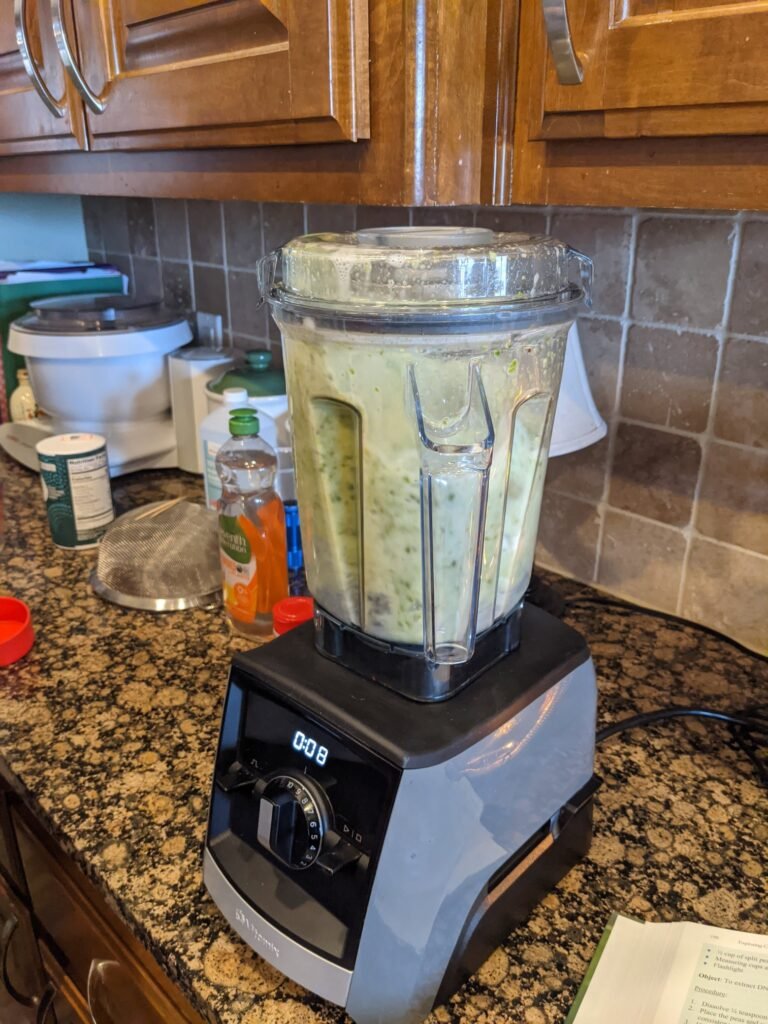
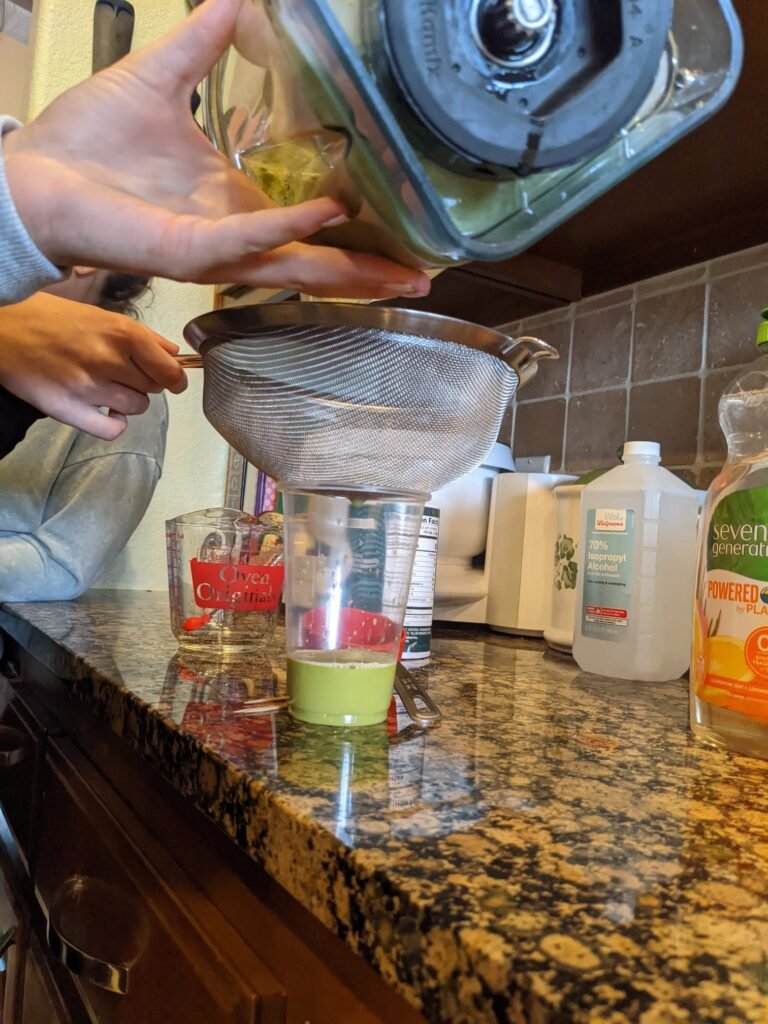
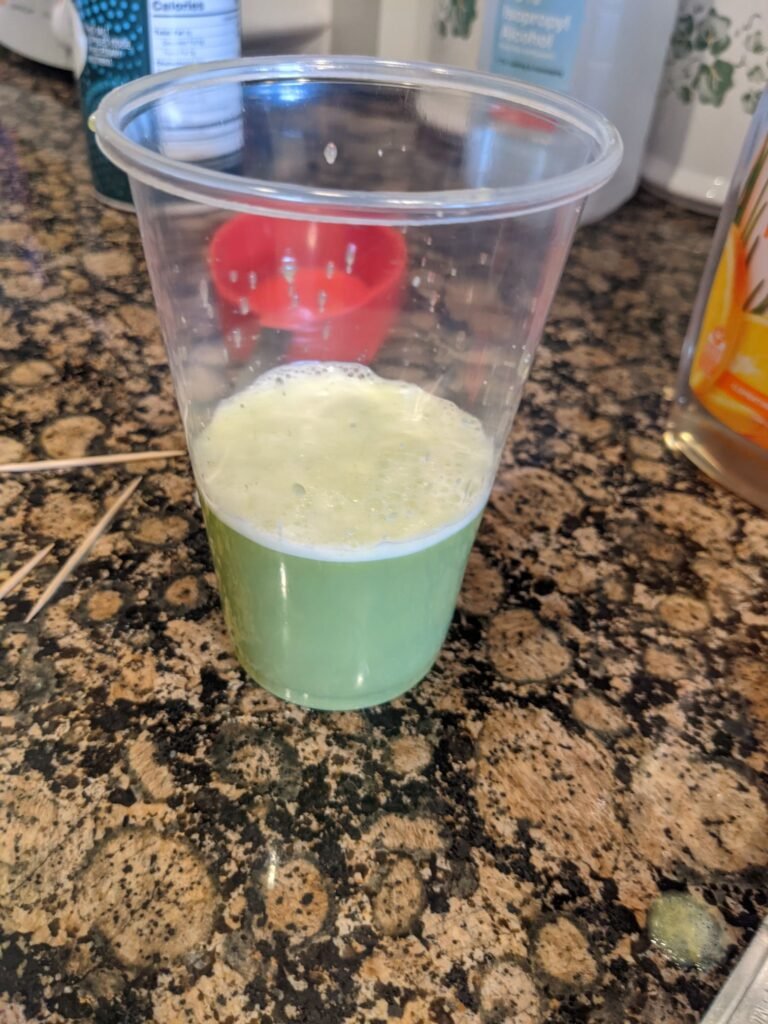
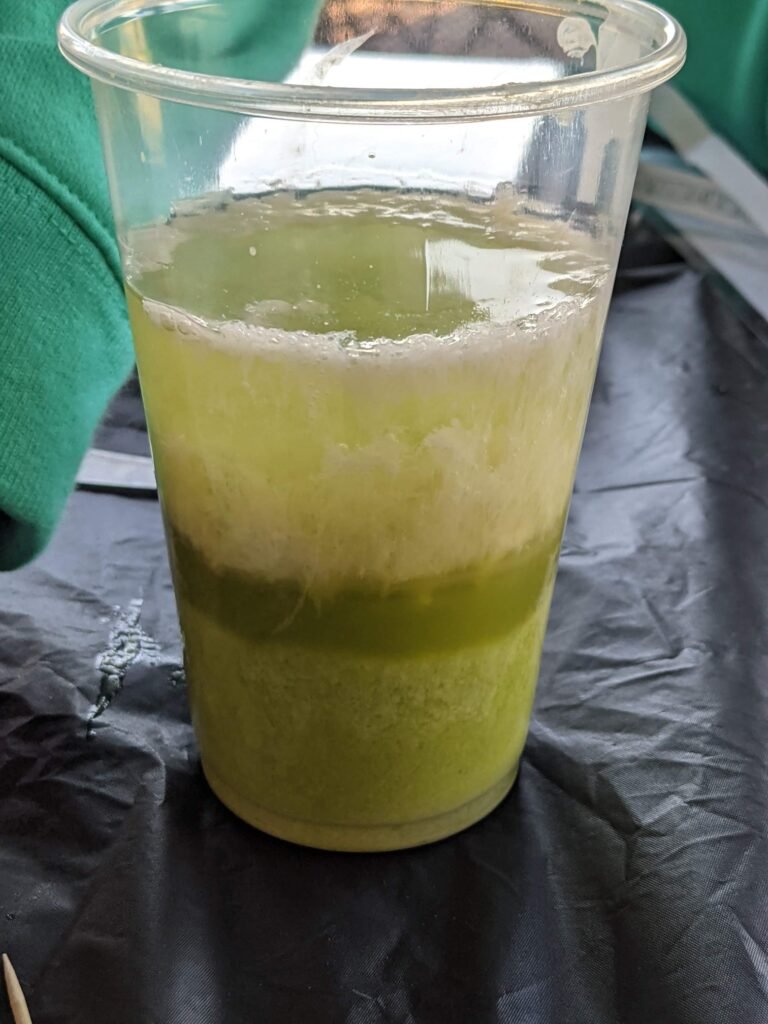
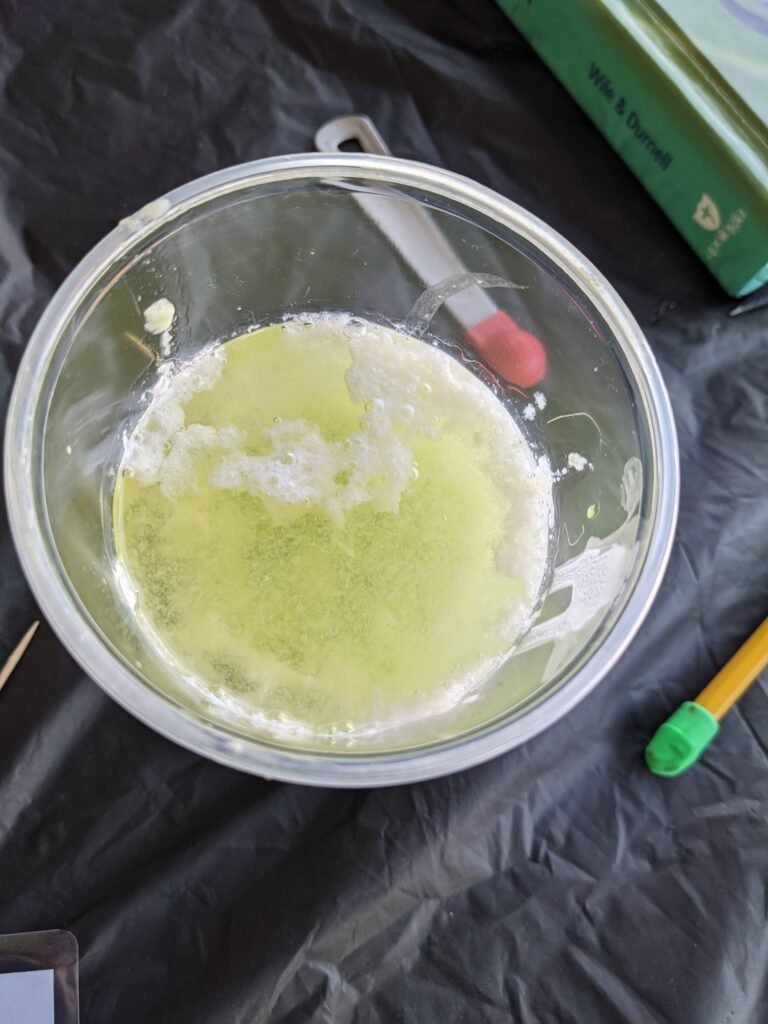
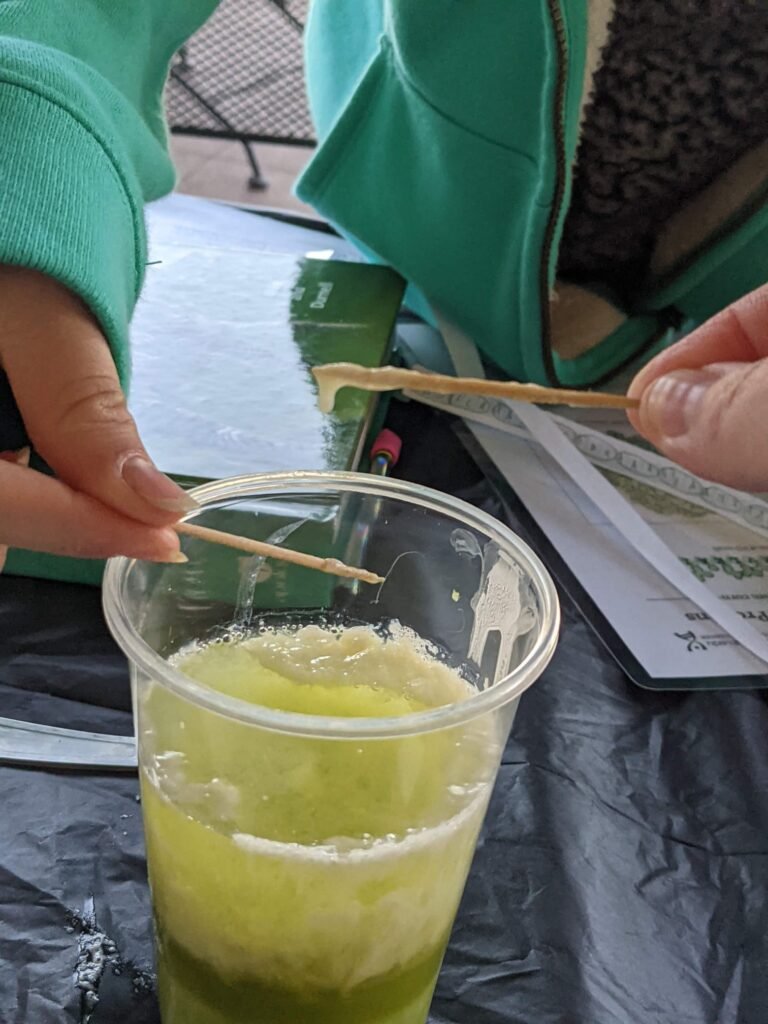
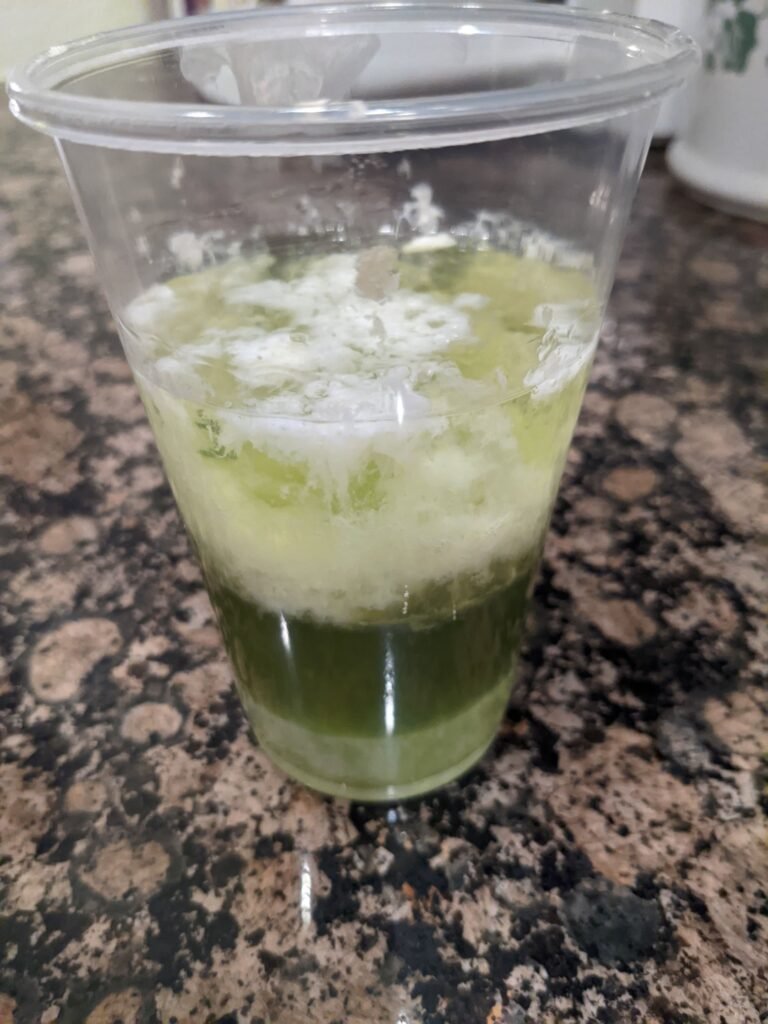
This week we started lab with a DNA extraction! First, we blended split peas with some water and salt – separating the cells in the peas. We then added soap and waited for it to do its work to break down the plasma membrane of the cells to release the DNA. After the soap lysis step the plasma membrane was out of the way, but we still needed to break down the proteins surrounding the DNA to make it more accessible. To do this we added meat tenderizer, which contains the enzyme bromelain (our old friend from the pineapple enzyme lab!). The bromelain works as a meat tenderizer by breaking down the collagen fibers in meat, but it also will break the peptide bonds between amino acids in any protein. Today we used it to break down the proteins surrounding the DNA from our pea cells. After adding the meat tenderizer, we carefully added rubbing alcohol, which helps the DNA come out of solution to be better visible. The salt that we added in the beginning helps bring the DNA from different cells together. We waited a bit longer, and before we knew it we could see the DNA! It was pretty cool to see, and fun to see the girls’ reactions, too! 
Protein Synthesis
While we were waiting during the DNA extraction, we dove into the topic of protein synthesis! Together we worked through a hands-on activity in which they transcribed a section of a real gene into mRNA, then translated it into a protein. I started with an overview, going over each of the organelles/macromolecules involved. After the overview, they got to try it themselves.
Parts involved in protein synthesis:
- DNA template strand = a portion of a DNA sequence from a real gene
- RNA polymerase = an enzyme (protein) that performs transcription
- mRNA = messenger RNA – carries the genetic “message” from the DNA template strand in the nucleus to the ribosome for translation
- Ribosome = organelle responsible for translation
- tRNA = transfer RNA – reads mRNA and transfers amino acids to the protein (YOU will be the tRNA in this modeling exercise!)
- protein = macromolecule made of amino acids bonded together – the goal of protein synthesis!
Proteins are responsible for many critical roles in the body, including doing most of the work in cells and providing structure, function, and regulation of the body’s tissues and organs.
Steps in Protein Synthesis
1. Transcription: the DNA template strand is TRANSCRIBED into mRNA
- In the nucleus of the cell, RNA polymerase wraps around the DNA template strand
- RNA polymerase slides along the DNA template strand and “unzips” and reads the DNA, generating an mRNA strand that is complementary to the DNA template strand. Normal base pairing rules apply, but mRNA uses Uracil (U) rather than Thymine (T) to pair with Adenine (A).
- When transcription is complete, the RNA polymerase detatches from the DNA template, and the mRNA leaves the nucleus to deliver its message.
2. Translation: the mRNA is TRANSLATED into a protein
- Outside the nucleus, mRNA attaches to the ribosome and slides until it finds the “AUG” start codon. This establishes the reading frame, and every three bases are a codon that codes for a specific amino acid.
- The tRNA (transfer RNA) molecules attach to the 3-letter codons on the mRNA by complementary base pairing with their anticodons.
- The tRNA molecules each carry an amino acid, and once the tRNA anticodon finds a match on the mRNA strand, the amino acid is TRANSFERRED to the amino acid chain by the ribosome, creating a protein (remember, a protein is a chain of amino acids).
- Final product = protein
When they were finished, they could read more about the actual protein whose DNA they were working with (we only worked with a small portion of each gene – the complete sequences are thousands of bases long). It was a blustery and chilly day, not ideal conditions, but we made the best of it. I know a few of the girls weren’t able to finish the modeling, so I will post the activity printables for anyone who would like to try again. In addition (or alternatively), I will also post a link to an online interactive transcription & translation activity. It can be a challenging exercise to go through all the steps of protein synthesis, but well worth thinking through the details to make sure that you understand what’s going on and where each part fits in to the big picture.
This course only covers the tip of the iceberg – there are so many more details (and more still being discovered!). This is truly one of my favorite topics, and I hope the girls had fun exploring it together.
Bonus Information
The information is not included in the text, but we talked about it in lab
- A promoter sequence in the DNA known as a “TATA box” is how RNA polymerase knows where to being transcription. In eukaryotes, the TATA box is typically 25-30 bases upstream of the gene to be transcribed.
- At the end of transcription, a “poly A tail” (a long chain of Adenine nucleotide bases, 100-250 bases long) is added to the mRNA strand. This poly A tail:
- Helps terminate transcription (this has to do with the nature of the base pairings: AU base pairings are held together by two hydrogen bonds and are less stable than GC base pairings, which are held together by three hydrogen bonds)
- Helps export the mRNA from the nucleus into the cytoplasm o makes the mRNA strand more stable, preventing degradation by enzymes in the cytoplasm as it travels to the ribosome for translation
- aids in translation